
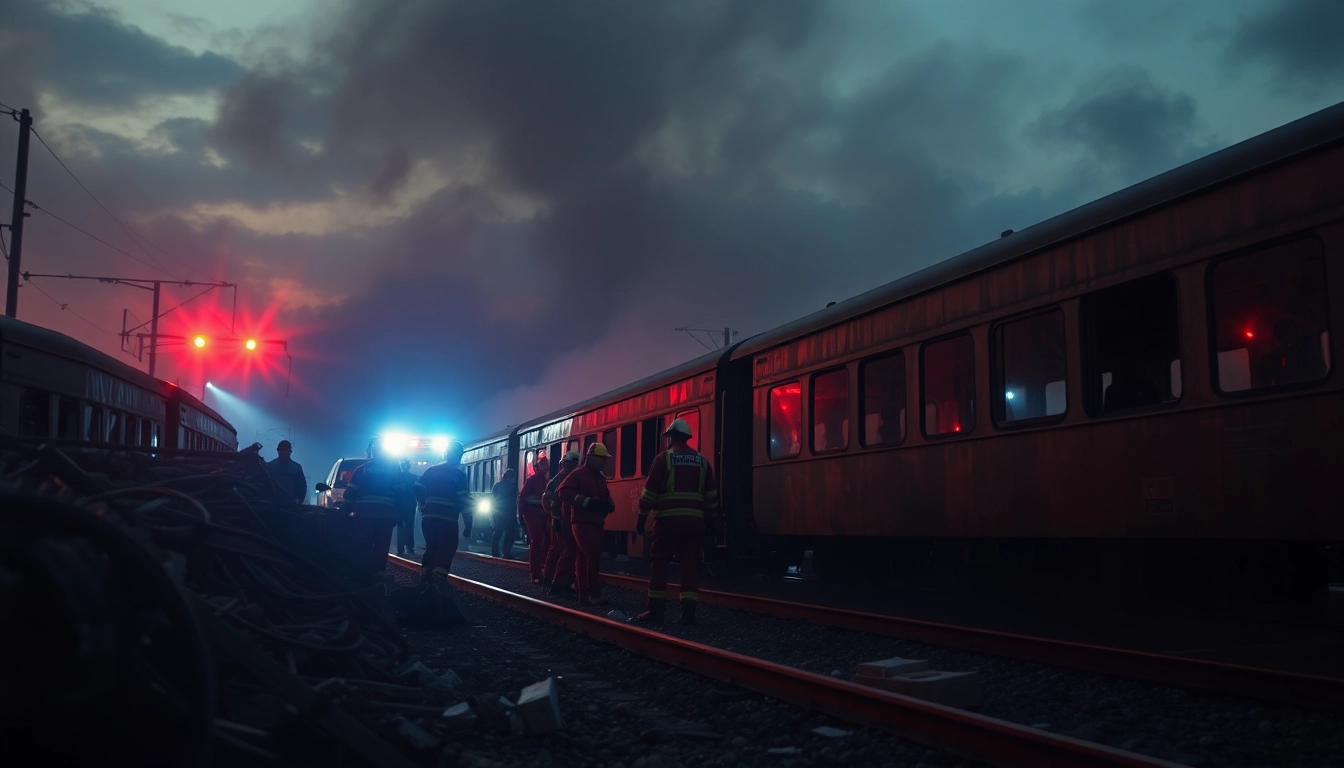
Understanding the Impact and Lessons from the Spain Train Crash
Overview of the Spain Train Crash
Rail travel is a fundamental aspect of transport in Spain, linking major cities and regions with efficiency and speed. However, with the complexity of rail systems, incidents unfortunately occur. The spain train crash events serve as stark reminders of the potential impacts of failures within this critical infrastructure. This article delves into the historical context, causes, responses, preventive measures, and the ongoing effects of train crashes in Spain, providing a comprehensive understanding of this serious subject.
Historical Context and Notable Incidents
Spain’s rail history dates back to the 19th century, evolving into one of the most advanced rail networks in Europe. However, along with advancements, notable train accidents have marred its reputation. The most infamous incident occurred in July 2013, when a high-speed train derailed in Santiago de Compostela, resulting in 79 fatalities and numerous injuries. This disaster raised vital questions about safety protocols, infrastructure maintenance, and operational procedures within the rail system.
Additionally, other incidents from the past decade, including collisions and derailments, underscore the ongoing challenges facing railway safety. These events often reflect a combination of mechanical failures, human error, and inadequate infrastructure investment, thus necessitating a critical look at the root causes behind such tragedies.
Recent Developments and Reports
Following notable incidents, authorities have conducted thorough investigations to ensure accountability and to improve safety measures. Reports have surfaced highlighting areas needing reform, such as insufficient training for operators and outdated infrastructure. For instance, a 2020 report revealed gaps in safety regulations and a lack of comprehensive safety evaluations after each incident.
Recent legislative initiatives have aimed to enhance safety protocols, including mandatory updates for aging train systems and improved training programs for railway staff. Public awareness campaigns encourage passengers to remain vigilant and to report any suspicious activities that may pose safety risks.
Continuing Impact on Travel and Safety
As a consequence of train crashes, confidence in rail travel fluctuates. Passenger numbers may decline after significant incidents, leading to economic implications for the transport sector. Moreover, personal tragedies resulting from such accidents profoundly affect families and communities, making it imperative to address the systemic issues contributing to these occurrences.
Furthermore, travel restrictions and heightened security protocols can arise, complicating logistics for both rail operators and passengers. Understandably, the psychological impacts on survivors and the bereaved can last for years, emphasizing the need for comprehensive support mechanisms following crashes.
Causes of Train Crashes in Spain
To implement effective preventive measures, understanding the primary causes of train crashes in Spain is integral. These causes can be broadly categorized into mechanical failures, human error, and environmental factors.
Mechanical Failures and Infrastructure Issues
Mechanical failures account for a significant portion of rail accidents. Equipment malfunctions, ranging from brake failures to signaling system errors, pose considerable risks. Aging infrastructure, particularly in regions where investment has lagged, exacerbates these vulnerabilities. Regular maintenance checks and timely upgrades are crucial, yet many systems still face delays that leave them susceptible to failure.
Moreover, inadequacies in railway signaling systems can lead to miscommunication between trains and control centers, further contributing to risk. The complexity of these mechanisms necessitates not only continued investment but also modernization to avoid potential catastrophes.
Human Error and Safety Procedures
Human error remains a leading factor contributing to train accidents. Instances of negligence, either in operating procedures or in decision-making, underline the importance of thorough training programs and ongoing assessments of staff competency. Reviewing the case of the Santiago de Compostela crash reveals that a combination of speed and operator inattention was a stark reminder of the human factor in rail safety.
Employing technology can mitigate such issues, as automated systems can assist or override human decisions when necessary. Routine training updates, simulations, and reinforcing a culture of safety among staff can help insulate against the risks associated with human error.
Environmental Factors Influencing Incidents
Environmental factors, including adverse weather conditions and geological shifts, can also lead to train accidents. Heavy rains, for example, can cause track damage, landslides, or flooding, making careful monitoring and adaptive strategies essential for safety. As climate change presents shifting weather patterns, proactive measures, such as enhanced drainage systems and track reinforcement, are paramount to ensure rail safety year-round.
Response and Recovery Efforts
Effective responses to train crashes are crucial not only for managing immediate crises but also for long-term recovery. Understanding the coordination among emergency services, evaluation of impact, and support systems for victims is essential for improving the overall efficacy of response strategies.
Emergency Protocols and Initial Response
In the event of a train crash, emergency protocols are activated to ensure rapid response. First responders, including medical personnel and fire services, must coordinate effectively to manage the scene as quickly and efficiently as possible. Advanced preparation, through drills and simulations, enhances their readiness to tackle the chaos that follows a crash.
Moreover, technology plays a vital role in improving communication during emergencies, easing coordination among various agencies. Establishing clear lines of authority and designating specific roles for personnel helps streamline operations, while continual assessment of these protocols ensures that they evolve based on lessons learned from past incidents.
Long-Term Support for Victims
The aftermath of a train crash can leave deep psychological scars on survivors and bereaved families. Long-term support services must be in place to provide ongoing assistance, including mental health services, financial support, and legal aid. Programs aimed at counseling and rehabilitation can aid victims in navigating their recovery journeys effectively.
Additionally, fostering community support initiatives creates connections between victims and resources. Support networks can help individuals share their experiences and encourage healing, highlighting the importance of empathy and understanding in the aftermath of tragedy.
Evaluation of Response Efficiency
Evaluating the effectiveness of response efforts is critical for continuous improvement. Post-incident analyses focus on key performance metrics, such as response times, the adequacy of support provided, and the successful coordination of emergency teams. Using this data, authorities can identify areas for enhancement and ensure that strategies evolve to meet changing needs.
Furthermore, engaging external experts to conduct unbiased evaluations can provide valuable insights, allowing response teams to adopt best practices from other regions experiencing similar challenges.
Preventive Measures and Safety Innovations
To decrease the likelihood of future train crashes, investing in preventive measures and technological innovations is crucial. From upgrading systems to implementing rigorous safety protocols, the rail industry must prioritize these strategies.
Technological Advances in Train Safety
Emerging technology holds great promise for enhancing train safety. Automated braking systems, advanced signaling solutions, and real-time monitoring tools can act as critical safeguards against accidents. For instance, incorporating satellite technology offers improved tracking capabilities, allowing operators to monitor train positions and conditions accurately.
Moreover, modernizing train control systems can further reduce human error, enhancing safety during operation. Adopting these technologies, however, necessitates significant investment and a commitment to continuous improvement within the sector.
Policy Changes Following the Crash
In the wake of significant incidents, policy changes often emerge as a response to identified deficiencies in safety protocols. Legislative reforms may call for stricter regulations, such as mandatory maintenance schedules for older trains and enhanced training programs for staff. Such measures help restore public confidence while ensuring that passenger safety remains the utmost priority.
Additionally, involving stakeholders, including public health experts and community leaders, in policy formulation can foster a holistic approach to safety enhancements that considers the diverse needs of the population.
Best Practices for Safe Travel
Passenger safety is paramount, and while systemic changes are essential, individuals can also take steps to ensure their own safety while traveling by train. Paying attention to announcements, remaining aware of surroundings, and following onboard safety protocols are critical practices for passengers. Moreover, speaking up about safety concerns can prevent incidents and foster a culture that prioritizes collective safety.
Travelers should also familiarize themselves with evacuation procedures and emergency contacts, empowering them to act decisively in the unlikely event of an incident. Empowering the public with knowledge and instilling a sense of responsibility contribute to a safer travel environment.
FAQs Regarding the Spain Train Crash
What safety measures are in place for trains in Spain?
Spain implements rigorous safety protocols, including regular maintenance checks, staff training, and real-time monitoring systems to ensure passenger safety.
How do authorities respond to train crashes?
Authorities activate predefined emergency protocols, coordinating with first responders, conducting investigations, and providing immediate medical support to mitigate impacts.
What are common causes of train accidents?
Common causes include mechanical failures, human error, infrastructure issues, and adverse environmental factors that can compromise safety.
Are there support services for victims of train crashes?
Yes, long-term support services, including mental health aid and legal assistance, are available to help victims navigate recovery and rebuild their lives.
How is infrastructure being improved post-incident?
Post-incident infrastructure improvements focus on upgrades, enhanced maintenance schedules, and technological advancements to bolster safety and reliability in rail service.